
KEYS & CHORDS
Find a key from its signature
- 1Signature
- 2Major or minor
- 3Answer
Your key is…
B minor
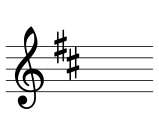
♯ 2 / Minor
Primary chords in this key
Key signature:♯ 2 / Root-position triads
Minor keys use the harmonic minor scale: the seventh degree is raised by a semitone. This may add an accidental beyond the key signature. The dominant (V) is a major triad.
Tonic
Bm Minor triad
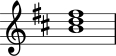
B・D・F♯
B4 · D5 · F♯5
The stable centre of the key, often heard at the beginning or end of a piece.
Subdominant
Em Minor triad
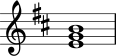
E・G・B
E4 · G4 · B4
Moves away from the tonic and opens up the harmony. It can lead toward the dominant.
Dominant
F♯ Major triad
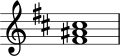
F♯・A♯・C♯
F♯4 · A♯4 · C♯5
Creates a pull back to the tonic. Listen to V followed by I to hear the resolution.
Hear the chords together
I → IV → V → I. Listen for the return to the tonic at the end.
Keep your device volume low when listening.
About note names and symbols
Note names use fixed-do pitch names. I, IV, and V are chords rooted on scale degrees 1, 4, and 5. Chord tones are listed from lowest to highest. The number after a letter identifies the octave; C4 is middle C.
A sharp raises a note by a semitone, a flat lowers it by a semitone, and a double sharp raises it by a whole tone. Different spellings can share a piano key, such as C-flat and B, or E-sharp and F. The keyboard and audio show the sounding pitches.
Further reading:Senzoku Online: Chord types / Yamaha: Scales and keys